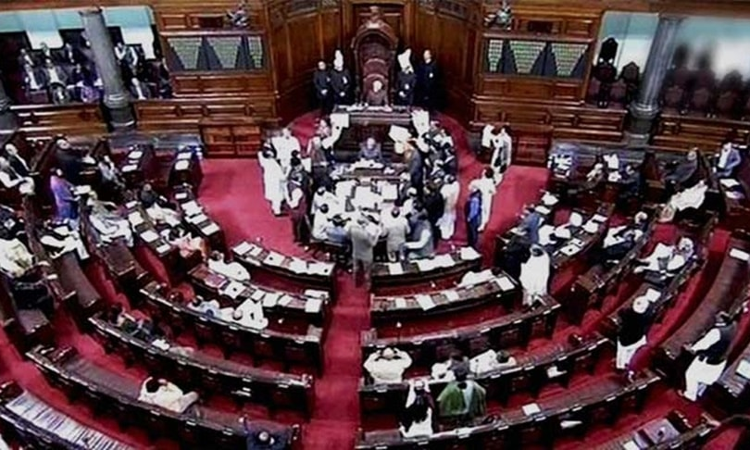
Srinagar: A fresh constitutional and electoral controversy has emerged in Jammu and Kashmir following the recent Rajya Sabha elections, centering on the appointment of “authorized agents” by political parties — a requirement that lies at the heart of transparency in the voting process.
Under established election norms, Rule 39AA(2) mandates that every political party with elected Members of the Legislative Assembly must appoint authorized agents. These agents are tasked with monitoring the polling process and ensuring that party legislators adhere to the official voting line.
J&K Rajya Sabha RTI: Who Voted BJP?
Did PDP switch sides? NC cross-vote? Congress behind it? RTI exposes Oct 2025 poll secrets
The issue has gained further complexity in light of a 2008 clarification issued by the Election Commission of India, which made it clear that the rule applies not only to parties fielding candidates but also to those extending support or merely participating in the voting process. The clarification aimed to eliminate ambiguity and close potential legal loopholes in electoral procedures.
Additionally, the appointment of such agents requires the formal submission of Form 22A, duly signed by the party president or general secretary. This document serves as official authorization, allowing agents to be present inside polling stations and oversee the voting process, including identifying any irregularities.
Experts argue that failure to appoint authorized agents undermines electoral transparency, as parties lose a critical mechanism to verify how their legislators voted. In such scenarios, allegations of cross-voting and hidden political alignments become difficult to investigate or prove.
The controversy has triggered sharp political reactions, with parties trading accusations over possible lapses and strategic maneuvering. However, legal experts emphasize that the resolution lies in strict adherence to electoral rules and their correct interpretation.
What began as a procedural issue has now evolved into a broader test of accountability and credibility within the democratic framework of Jammu and Kashmir.
ANN News is the first and only 24*7 Tv News Channel of Kashmir, having its headquarters at Srinagar. ANN News is available on all leading cable Networks, Also Available On JIO Tv , Vodafone,TataPlay , Candor Network, Dailyhunt and other leading Platforms
ANN News is the first and only 24*7 Tv News Channel of Kashmir, having its headquarters at Srinagar. ANN News is available on all leading cable Networks, Also Available On JIO Tv , Vodafone,TataPlay , Candor Network, Dailyhunt and other leading Platforms