Premature Deliveries, Infant Mortality and Maternity Care Under Scrutiny in South Kashmir
When Convenience and Commercial Interests Put Newborn Safety at Risk, Accountability Must Follow

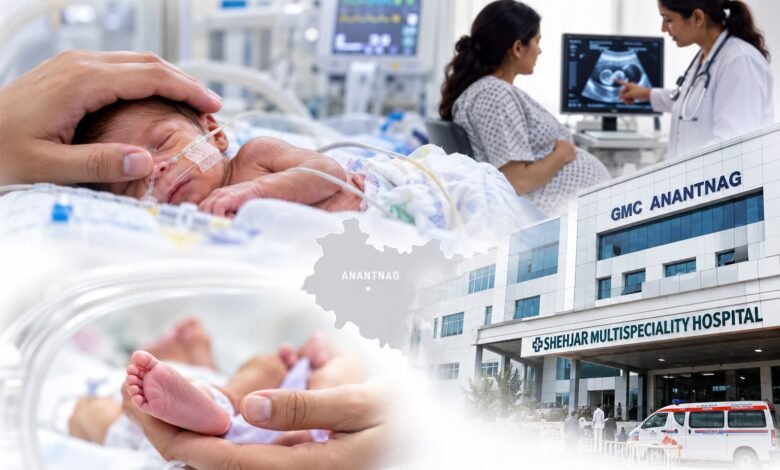
GMC Anantnag’s first such neonatal training programme at a private hospital highlights the need for collective efforts, responsible delivery decisions and stronger newborn care
By Arif Rashid | ANN News
Anantnag: The need to strengthen newborn care, prevent avoidable premature deliveries and reduce infant mortality has come into focus following a neonatal resuscitation training programme organised by Government Medical College (GMC) Anantnag, in collaboration with a private healthcare institution, at Shehjar Multispeciality Hospital in Anantnag.
The programme, held under the Indian Academy of Pediatrics’ Neonatal Resuscitation Programme (NRP) and the First Golden Minute Project, focused on the importance of providing timely and effective resuscitation to newborns immediately after birth. The initiative is significant as GMC Anantnag has, for the first time, conducted such a programme at a private hospital, highlighting the importance of cooperation between public and private healthcare institutions in improving newborn survival.
Infant mortality remains an important public health concern, with premature births and complications during delivery among the factors that can contribute to newborn deaths. Babies born before completing 37 weeks of pregnancy face a higher risk of breathing difficulties, feeding problems, infections and other complications, making specialised medical attention and timely intervention essential.
According to the Sample Registration System (SRS) Statistical Report, Jammu and Kashmir recorded an infant mortality rate of 14 deaths per 1,000 live births. However, this is a regional figure and does not represent Anantnag district alone or establish how many infant deaths are specifically attributable to premature deliveries. District-level data on preterm births and related neonatal deaths is necessary to understand the scale of the problem in South Kashmir.
Kerala’s example offers lessons for Jammu and Kashmir
Kerala offers an important example of how sustained investment in maternal and child healthcare can help reduce infant deaths. The state has maintained one of India’s lowest infant mortality rates, supported by widespread access to institutional deliveries, antenatal and postnatal care, immunisation, skilled birth attendants and newborn healthcare services. The SRS Statistical Report 2024 recorded Kerala’s infant mortality rate at eight deaths per 1,000 live births. Its experience highlights the value of early identification of pregnancy-related risks, prompt referral of high-risk pregnancies, effective newborn resuscitation and continuous monitoring of mothers and babies. Strengthening similar services in Jammu and Kashmir could help prevent avoidable newborn deaths.
Obstetricians’ role crucial in preventing avoidable complications
Speaking on the sidelines of the programme, Dr Fozia Jan, Senior Consultant Gynaecologist and Obstetrician, stressed the crucial role of obstetricians in improving birth outcomes and reducing preventable infant deaths.
She emphasised the importance of prioritising safe and appropriately timed deliveries, adding that collective efforts by healthcare professionals and other stakeholders could help Jammu and Kashmir work towards outcomes comparable to those achieved by Kerala.
Medical experts generally advise that deliveries should be timed according to the health and safety of both mother and baby. An elective delivery without a medical indication is generally avoided before 39 completed weeks of pregnancy because earlier delivery can increase certain risks for the newborn. However, when a medical condition makes early delivery necessary, delaying it can also endanger the mother or baby. Decisions must therefore be based on proper clinical assessment rather than convenience alone.
Responsibility must accompany every delivery decision
The issue also raises questions about the responsibility of families and healthcare providers when decisions about the timing of delivery are made. In some cases, families may request an early delivery for personal or practical reasons without fully understanding the possible consequences. Healthcare professionals have a responsibility to explain the risks, counsel families and ensure that decisions are guided by medical necessity and established clinical standards.
At the same time, any allegation that a doctor or hospital has recommended an unnecessary early delivery for financial gain must be examined through credible evidence and an appropriate investigation. If professional negligence or deliberate misconduct is established, accountability should follow. Families, meanwhile, should receive clear information and should not be blamed automatically for adverse outcomes.
The objective must be to ensure that no delivery is brought forward without an appropriate medical reason and that every mother and newborn receives the care required for a safe outcome.
Concerns over maternity facilities in private hospitals
Concerns have also been raised about the availability and adequacy of labour-room facilities in private healthcare institutions in Anantnag. The availability of appropriately equipped delivery rooms, trained staff, newborn resuscitation equipment and timely referral arrangements is essential for safe maternity care.
Claims regarding gaps in private-sector facilities require verification through official inspections and data from the Health Department. Authorities should assess whether facilities conducting deliveries have the necessary infrastructure, qualified personnel, emergency obstetric services and arrangements for managing newborns who require specialised treatment.
Improved coordination between government medical institutions and private hospitals could help strengthen referral systems, emergency response and training for healthcare personnel.
Need for transparent data and coordinated action
Healthcare authorities should make district-level information available on premature births, neonatal deaths, infant mortality, delivery patterns and the availability of maternity and newborn-care facilities. Such data would help identify the principal causes of preventable deaths and determine where interventions are most urgently needed.
Regular training in neonatal resuscitation, timely referral of high-risk pregnancies, appropriate delivery planning, stronger labour-room standards and effective postnatal monitoring should remain priorities. Equally important is counselling families about the risks associated with unnecessary early delivery and ensuring that clinical decisions are made in the best interests of mothers and babies.
The neonatal training programme at Anantnag is a step towards strengthening professional preparedness and collaboration. However, reducing infant mortality will require sustained action beyond individual training events, with healthcare institutions, doctors, families and authorities working together.
Ultimately, every effort must be directed towards ensuring safe deliveries, preventing avoidable complications and giving every newborn the best possible chance of survival.
If a family knowingly insists on an unnecessary early delivery despite understanding the risks, its decision deserves scrutiny. If a doctor knowingly performs or recommends such a procedure primarily for profit, that conduct deserves equally serious scrutiny. Where either action is proven to have contributed to preventable harm, accountability must follow.