
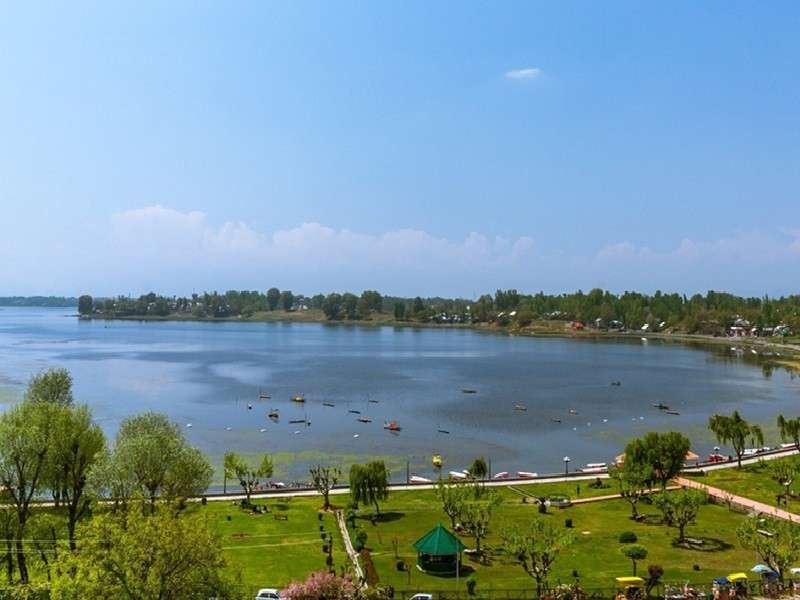
Manasbal lake critically polluted; drinking water source fouled by faecal matter: CPCB
Srinagar, Aug 8: A report by the Central Pollution Control Board (CPCB) has revealed critical levels of pollution in the famous freshwater lake Manasbal in Jammu and Kashmir’s Ganderbal district, sparking major public health concerns.
The lake serves as a primary drinking water source for the residents across the Ganderbal and Bandipora districts.
Recent tests conducted by the CPCB indicate that the lake is heavily contaminated with faecal matter, raw sewage, and solid waste.
The CPCB carried out the tests in April after the National Green Tribunal (NGT) directed them to assess the water quality, following a petition by environmental activist Raja Muzaffar Bhat.
The petitioner alleged that untreated sewage, including pesticides from 14 villages, was entering Manasbal lake through the Lar Canal, degrading the lake’s ecology.
The NGT had ordered the CPCB to conduct the tests in January this year.
The CPCB findings paint a grim picture of ecological degradation and potential health risks for the local population.
The findings suggest dangerous water quality in the lake as none of the seven water samples collected met Class B standards, indicating that the water is unfit even for outdoor bathing.
Of the seven samples, four were taken from Manasbal Lake, two from natural springs, and one from the Lar Canal.
The report categorises five of the seven tested locations as Class D, meaning the water is only suitable for wildlife and fisheries.
Only one spring met Class C standards (drinking water after treatment), while another spring failed to meet even the basic quality standards of Classes A-D.
The tests confirmed elevated levels of faecal and total coliform bacteria, indicating contamination from human and animal sewage, which makes the water unsafe for direct consumption.
However, most heavy metals were found to be below detectable limits.
The CPCB noted that household wastewater (grey water) is flowing directly into the lake, along with mixed municipal waste and plastics dumped openly along the shores, particularly near the Kondabal area.
The report said the primary reason behind the contamination is the unchecked flow of untreated waste. Wastewater from seven neighbouring villages enters the lake through the Lar Canal, which flows into the lake without any treatment or filtration.
Bhat condemned this as criminal negligence by the authorities. He claimed that locals in Safapora have been warning about the deteriorating water quality for years, but their concerns have been ignored.
“The government claimed a Sewage Treatment Plant (STP) was being set up to protect the lake, but it never came up. This is criminal negligence on the part of authorities as 50,000 to 60,000 people are supplied this same contaminated water for drinking purposes,” Bhat said. (PTI)

ANN News is the first and only 24*7 Tv News Channel of Kashmir, having its headquarters at Srinagar. ANN News is available on all leading cable Networks, Also Available On JIO Tv , Vodafone,TataPlay , Candor Network, Dailyhunt and other leading Platforms