Beyond the White Coat: Dr. Farooq Ahmad Ganie and the Unsung Heroes Who Watch Every Heartbeat
A personal family's journey through cancer treatment at SKIMS offers a glimpse into the compassion of dedicated doctors and the sleepless sacrifices of ICU healthcare professionals.
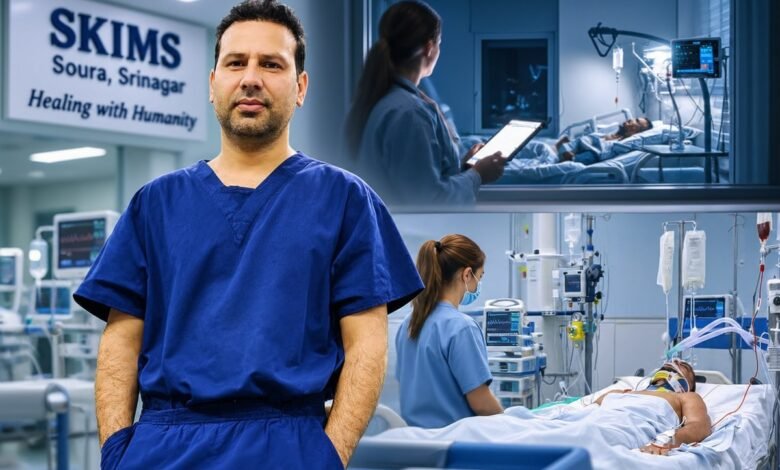
A few weeks ago, my family and I went through one of the most difficult and emotionally challenging phases of our lives when my father developed complications while eating. Following a series of medical investigations, we received news that changed the atmosphere of our entire family: he had been diagnosed with cancer of the Gastroesophageal (GE) Junction.
The news came as a shock. Initially, my younger brother and I decided not to inform other family members until we could understand the situation and identify the best possible treatment options for our father. We were worried, confused and desperately looking for the right medical guidance.
Our search for treatment took us to several leading healthcare institutions in Anantnag and Srinagar, including Government Medical College Anantnag and SMHS Hospital Srinagar. We consulted different sources, explored possibilities and tried to understand where our father could receive the best treatment. However, the uncertainty surrounding the disease and the available treatment options left us increasingly confused.
Amid this difficult situation, one name suddenly came to my mind , my childhood friend, Dr. Zahid Majeed, currently a leading doctor working outside Jammu and Kashmir.
Dr. Zahid is not just a friend to me, he is a respected personality and a source of pride for our entire area. From childhood, he was known for his noble, humble and generous nature. His professional achievements have brought recognition to our locality, but what makes him particularly special is his willingness to help people whenever they need guidance or support, irrespective of their circumstances.
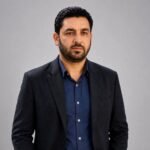
When I shared my father’s medical condition with him, he did not waste a moment in guiding us. Without unnecessary delay, he suggested that we consult Dr. Farooq Ahmad Ganie, Associate Professor, Cardiothoracic and Vascular Surgery (CVTS), Sher-i-Kashmir Institute of Medical Sciences (SKIMS), Soura, Srinagar.
Dr. Farooq Ahmad Ganie has expertise in thoracic and chest wall tumours, lung surgeries, lung cancers and oesophageal surgeries, including procedures involving oesophageal tumours.
Following his advice, we reached SKIMS and sought an appointment with Dr. Farooq Ahmad Ganie.
After examining the case and reviewing the necessary investigations, including endoscopy, CT scan, biopsy and PET scan, Dr. Farooq Sir approached our father’s condition with remarkable confidence and reassurance.
At a time when our family was overwhelmed by fear and uncertainty, his words brought us considerable relief. He reassured my father, asking him not to worry and explaining that the condition could be treated.
His calm approach and confidence in the treatment process gave us something we desperately needed at that moment — hope.
Before entering SKIMS, we were carrying enormous anxiety. But after meeting the doctor, our discussions gradually shifted from fear towards treatment and recovery. We began following his instructions and proceeded with admission and further treatment as advised.
After spending several days at SKIMS, we finally found our father’s name on the operation theatre list of the CVTS department. The day was emotionally significant for our entire family. My father subsequently underwent surgery under the care of Dr. Farooq Ahmad Ganie and his medical team.
The surgery was successfully performed, marking an important milestone in our family’s difficult journey.
However, what I witnessed during those days at SKIMS changed not only my understanding of the medical profession but also my perception of the people working tirelessly inside hospitals.
Dr. Farooq Ahmad Ganie: A Doctor’s Reassurance Beyond Medical Treatment
In our society, people often form opinions about doctors and healthcare workers based on isolated experiences. Some believe that medical professionals are primarily concerned with earning money, while others question their sympathy, accessibility and commitment towards ordinary patients.
Constructive criticism and accountability are certainly important in every healthcare institution. Patients and their attendants have every right to expect proper treatment, respectful behaviour and transparency.
However, after spending several weeks at SKIMS, witnessing the working environment and observing doctors and healthcare workers closely, I realised that the reality is often far more complex than the general perception.
I personally witnessed the generosity, helpfulness, professional commitment and caring nature of Dr. Farooq Ahmad Ganie. What particularly impressed me was his approach towards patients and their families, without making distinctions based on caste, creed, financial status or social background.
For him, a patient requiring treatment deserved attention, care and professional commitment.
Over nearly two decades of professional service, his contribution to patient care has left a lasting impression on countless families. One can hardly measure the relief experienced by families when a critically ill patient receives timely treatment and returns home with renewed hope.
His professional dedication, reassuring attitude and willingness to guide patients deserve appreciation. For families confronting serious illnesses, sometimes a doctor’s confidence and compassionate words become an important source of strength.
And this experience also made me realise that Dr. Farooq is not an isolated example. There are numerous doctors, nurses, technicians and paramedical professionals across our healthcare institutions who continue to serve humanity with dedication, often without receiving the recognition they deserve.
When the World Sleeps, ICU Doctors and Healthcare Workers Watch Every Heartbeat
Perhaps one of the most demanding responsibilities in any hospital is performed by doctors, nurses and paramedical staff working inside Intensive Care Units (ICUs).
While the rest of the hospital gradually becomes quieter during the night, ICU healthcare professionals remain alert, keeping a constant watch on patient monitors, vital signs, oxygen levels, heart rates, blood pressure and other critical parameters.
Their eyes remain focused on screens displaying the changing condition of critically ill patients. Every alarm, every significant fluctuation and every indication of deterioration demands attention and, when necessary, an immediate response.
For these professionals, a night shift is not simply another working schedule. It is a continuous responsibility that demands patience, concentration, clinical expertise and readiness to respond to emergencies at any moment.
They remain beside critically ill patients for long hours, often sacrificing their own sleep and comfort. During brief intervals, some may manage a few moments of rest in the corners of hospital rooms or wherever they find a little space. Yet their responsibility never truly ends while patients remain under their care.
Behind every monitor displaying a heartbeat is a human life, a worried family and a team of professionals determined to provide the best possible care.
Families may spend the entire night praying outside ICU doors, unaware of the countless efforts taking place inside. Meanwhile, doctors, nurses and paramedical staff continue their vigil, carefully observing every change and taking necessary steps to protect the lives entrusted to their care.
Sometimes, while an entire family waits anxiously for a loved one to recover, an entire team of healthcare professionals is working through the night to ensure that the patient’s heartbeat continues.
While families pray outside ICU doors, doctors and healthcare workers remain awake inside, watching every heartbeat and responding to every moment that matters.
The Unsung Contribution of Nurses and Paramedical Staff
During my stay at SKIMS, I also realised how incomplete any discussion about healthcare professionals would be without acknowledging the contribution of nurses, technicians and paramedical staff.
A hospital cannot function effectively through the efforts of doctors alone. It requires a coordinated team in which every individual has an important role in patient care.
Nurses remain attentive to patients, administer medicines, monitor their condition and assist during emergencies. Technicians and other paramedical personnel ensure that essential investigations, equipment and medical support are available whenever required.
Their contribution becomes particularly important inside ICUs and operation theatres, where teamwork, coordination and timely intervention are essential.
Many of these professionals spend long hours away from their families, work through demanding shifts and continue their responsibilities despite physical exhaustion.
They may not always appear in public photographs or receive individual recognition, but their contribution remains an indispensable part of every patient’s treatment journey.
The Human Side of a Profession Often Misunderstood
Doctors and healthcare workers are human beings too. They have families, personal responsibilities, emotional challenges and physical limitations. Yet, when they enter hospitals and assume responsibility for patients, they are expected to remain attentive, composed and professionally committed.
My experience has taught me that behind a doctor’s white coat is not merely a medical degree or professional designation. There are years of education, training, experience, difficult decisions and the responsibility of dealing with human lives.
A reassuring sentence from a doctor can give a distressed family the strength to face another difficult day. A nurse’s timely attention can bring comfort to a helpless patient. A technician’s contribution can help doctors make important clinical decisions.
These efforts may appear small to an outsider, but for a family going through a medical crisis, they can mean everything.
This does not mean that shortcomings in healthcare institutions should be overlooked. There must always be accountability, transparency and continuous improvement in patient services. But genuine dedication and selfless service must also be acknowledged and appreciated.
A Personal Experience, A Broader Message
My father’s treatment journey has given me a perspective that I could not have fully understood without experiencing it myself.
I entered SKIMS with fear, uncertainty and countless questions. During our stay, I encountered professionals whose commitment, reassurance and dedication gradually changed my perception of the medical community.
I will always remain grateful to my childhood friend Dr. Zahid Majeed for guiding us at a crucial moment and introducing us to the right medical support.
I also extend my heartfelt appreciation to Dr. Farooq Ahmad Ganie and the entire CVTS team at SKIMS for their professional commitment, care and efforts during my father’s treatment.
My gratitude also goes to every doctor, nurse, technician and paramedical worker whose contribution often remains unseen but whose efforts make a real difference in the lives of patients and their families.
Perhaps we should pause before forming a general opinion about doctors and healthcare workers. We should also look beyond hospital bills, waiting periods and individual grievances to recognise the human effort taking place behind hospital doors.
A white coat is not merely a symbol of a profession. It represents responsibility, knowledge, compassion and a commitment to humanity.
When families pray for their loved ones to survive, there are doctors, nurses and paramedical staff working through sleepless nights, standing beside hospital beds and watching every heartbeat on ICU monitors.
When the world sleeps, they remain awake. When families lose hope, they continue their efforts. And when every heartbeat matters, they stand ready to serve humanity.
Respect to every healthcare professional who sacrifices personal comfort, sleep and family time to protect the lives of others.
Sometimes, it takes a personal struggle to understand the sacrifices of those who dedicate their lives to saving others.