Face Authentication Not Compulsory for Ration Distribution in J&K, Four Aadhaar Verification Options Available: Sourabh Bhagat
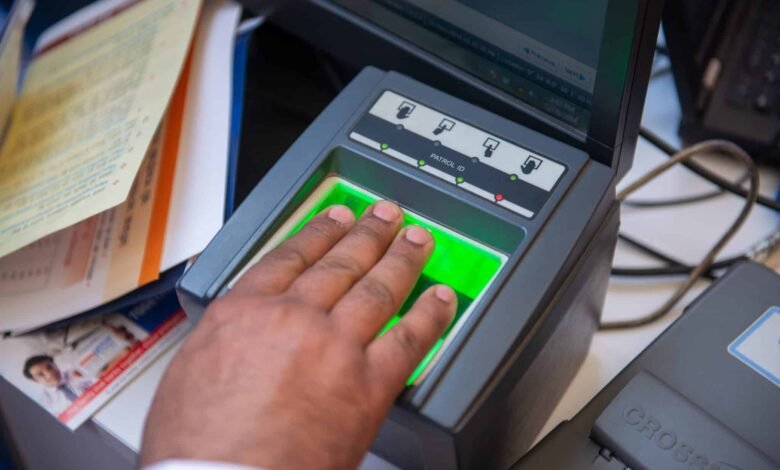
Srinagar November 11 : Commissioner Secretary FCS&CA clarifies beneficiaries can collect ration through fingerprint, iris scan, OTP or facial recognition; any adult family member eligible to receive ration; department accelerates e-KYC and digital authentication drive across J&K
Amid growing confusion among ration card holders over the introduction of facial recognition technology for ration distribution in Jammu and Kashmir, Commissioner Secretary, Food, Civil Supplies and Consumer Affairs (FCS&CA), Sourabh Bhagat, has clarified that face authentication is not mandatory for beneficiaries.
He said ration card holders are free to use any of the four Aadhaar-based authentication facilities available under the Public Distribution System (PDS), adding that the objective is to make ration distribution more transparent, accessible and accountable.
Speaking to a news agency, Bhagat said Aadhaar-based authentication has been operational in Jammu and Kashmir since around 2020. The mechanism has been strengthened over the years to prevent diversion of foodgrains, eliminate irregularities and ensure that government-supplied ration reaches the actual beneficiaries.
According to him, the department initially relied primarily on fingerprint-based biometric verification. However, additional technological options have now been introduced to facilitate beneficiaries facing difficulties with conventional authentication.
The four available methods include .Fingerprint authentication: Verification through thumb or fingerprint scanning.Iris authentication: Identification through an iris scan.OTP authentication: Verification through a one-time password received on the registered mobile phone.Face authentication: Identification through facial recognition technology.
Bhagat categorically stated that beneficiaries are not required to use facial recognition exclusively and may choose whichever authentication method is convenient and accessible to them.
Any Adult Family Member Can Collect Ration
Addressing another concern among ration card holders, the Commissioner Secretary clarified that ration collection is not restricted to the head of the household.
He said any adult member of a registered family can visit the Fair Price Shop and collect the family’s entitled ration after completing the prescribed authentication procedure.
“If the father is unable to visit the ration depot, the mother can collect the ration. Similarly, an adult son, daughter, brother or sister can visit the shop. It is not necessary that only the head of the family should collect the ration,” he explained.
He, however, advised families against sending minor children independently to ration depots, emphasising that an adult family member should undertake the process.
Multiple Verification Facilities for Beneficiaries Facing Difficulties
The Commissioner Secretary said the availability of alternative authentication methods would particularly benefit elderly persons, physically challenged individuals and those unable to complete fingerprint verification.
He explained that beneficiaries who have lost a hand or are unable to provide a proper fingerprint can opt for facial recognition or another available verification method.
Similarly, OTP authentication provides another option in cases where fingerprint-based verification is unsuccessful or inconvenient.
Bhagat said the department has incorporated these alternatives to ensure that genuine beneficiaries are not deprived of their entitled foodgrains because of biometric or other technical difficulties.
Department Rejects Claims of Compulsory Face Authentication
Referring to messages circulating on WhatsApp and other social media platforms, Bhagat said reports suggesting that facial authentication had become the only compulsory method for collecting ration were misleading.
He urged beneficiaries not to panic over such messages and clarified that the introduction of facial recognition does not eliminate the other three authentication facilities.
The Commissioner Secretary said the transition towards technology-driven ration distribution was intended to strengthen accountability and prevent diversion of government foodgrains.
He maintained that digital verification allows the department to monitor the actual distribution of ration against the number of registered beneficiaries.
Explaining the mechanism, he said the system electronically records how many beneficiaries have collected their allocated ration and how many are still pending.
For instance, if ration is allocated for 500 beneficiaries but only 300 complete authentication and receive their supplies, the digital system reflects the remaining 200 beneficiaries.
He said such monitoring helps identify discrepancies and strengthens transparency in the distribution chain.
Bhagat also responded to objections being raised by certain sections over internet connectivity, fingerprint failures and other technical issues, maintaining that alternative authentication arrangements are already available.
J&K Adopts Advanced Authentication Under Sarthak PDS
Bhagat said the upgraded authentication mechanism is being implemented under the Sarthak Public Distribution System initiative, aimed at modernising ration distribution throughout the country.
He said the initiative forms part of the wider technology-driven reforms being undertaken by the Government of India.
According to him, facial recognition technology has been introduced as an additional facility in Jammu and Kashmir to simplify verification at Fair Price Shops.
Explaining the process, he said the dealer enters the beneficiary’s details into the system, following which a designated circle appears on the screen. The beneficiary positions their face within the circle and blinks to complete the verification.
He said the entire procedure generally takes around 40 to 50 seconds, making it a convenient alternative to conventional biometric verification.
Fair Price Shop Dealers’ Commission Raised From Rs 108 to Rs 195 Per Quintal
In another significant development, Bhagat disclosed that the Government of India has enhanced the commission payable to Fair Price Shop dealers in Jammu and Kashmir, northeastern states and other hilly regions.
He said the earlier commission of Rs 108 per quintal has been increased to Rs 195 per quintal.
The revision represents a substantial increase in the financial margin available to ration dealers.
Bhagat said the enhanced commission would improve the financial viability of Fair Price Shops while ensuring that the strengthened monitoring mechanism does not create additional financial difficulties for dealers.
He maintained that the objective of the revised system is to balance the interests of dealers with the government’s commitment to transparent and accountable ration distribution.
FCS&CA Reviews Ration Distribution, Winter Stocking and e-KYC Progress
Meanwhile, the Food, Civil Supplies and Consumer Affairs Department has intensified its efforts to improve the functioning of the Public Distribution System across Jammu and Kashmir.
During a comprehensive review meeting held on November 5, Commissioner Secretary Sourabh Bhagat assessed the progress of foodgrain lifting and distribution, Aadhaar-based e-KYC, facial authentication, winter stocking arrangements and the proposed Central Bank Digital Currency (CBDC) initiative.
The meeting was attended by Director General FCS&CA Jammu Rajesh Kumar Shavan, representatives of the Food Corporation of India (FCI), Director IT Sanjay Gupta, Deputy Commissioners and Assistant Directors from various districts through video conferencing.
Officials presented district-wise updates on the implementation of departmental programmes and highlighted issues requiring administrative intervention.
Officers Directed to Complete Winter Stocking Before Adverse Weather
Keeping in view the approaching winter and the possibility of transportation disruptions, Bhagat directed the concerned authorities to accelerate the lifting and distribution of foodgrains.
He stressed that both six-month and three-month winter stocking requirements must be fulfilled within the prescribed timelines.
The FCI was also asked to ensure timely availability and supply of quality foodgrains to the department so that consumers, particularly those living in remote and snowbound areas, do not face shortages during winter.
Remote Areas to Get Departmental Petrol Outlets
Reviewing the availability of petroleum products, the Commissioner Secretary directed district administrations to identify remote and far-flung areas where petrol pump facilities are either unavailable or inadequate.
He asked officials to coordinate with Oil Marketing Companies (OMCs) and examine suitable arrangements for establishing departmental-owned petrol outlets.
The proposed initiative is intended to improve access to fuel facilities, particularly for residents of remote areas who face difficulties during emergencies and adverse weather conditions.
CBDC Implementation to Begin in Jammu and Srinagar From November 15
The meeting also reviewed the proposed introduction of Central Bank Digital Currency under the Public Distribution System.
Officials informed the meeting that the pilot phase of the CBDC project is scheduled to commence in Jammu and Srinagar districts from November 15, 2026.
The subsequent rollout schedule includes:
* November 15, 2026: Pilot implementation in Jammu and Srinagar.
* November 30, 2026: Expansion to Samba, Kathua and Udhampur.
* December 31, 2026: Proposed coverage across the entire Union Territory of Jammu and Kashmir.
Bhagat directed the district administrations and Assistant Directors to complete beneficiary data preparation, verification and other necessary formalities ahead of the scheduled implementation.
NIC and Punjab National Bank (PNB) authorities were also asked to expedite beneficiary data validation, whitelisting and creation of login credentials for Fair Price Shop dealers.
Special e-KYC Camps to Be Organised Across Districts
Taking serious note of pending Aadhaar-based e-KYC cases among National Food Security Act (NFSA) beneficiaries, Bhagat instructed district administrations to launch special verification camps.
The department has been directed to identify beneficiaries whose e-KYC remains incomplete and facilitate their verification through appropriate channels.
Officials have also been asked to implement the Face Authentication Application from the current month’s ration distribution cycle, while ensuring that alternative Aadhaar authentication methods remain available.
The Commissioner Secretary set a performance benchmark of at least 95 per cent e-KYC completion and said districts achieving the target or higher coverage would be suitably appreciated.
He added that improved verification coverage would strengthen the department’s case for seeking additional financial assistance and technological support from the Government of India under the Sarthak PDS initiative.
The e-KYC status of migrant ration card holders was also reviewed, with directions to clear pending cases without unnecessary delay.
Five Fair Price Shops in Every District to Be Upgraded
As part of the department’s modernisation programme, district administrations have been directed to identify five Fair Price Shops in each district for infrastructure improvement.
The proposed upgrading exercise will be undertaken through convergence with the Mahatma Gandhi National Rural Employment Guarantee Act (MGNREGA) and other applicable government schemes.
The initiative is aimed at improving the infrastructure and operational facilities of ration distribution centres.
Additional Government Granaries Planned in Remote and Border Areas
The Commissioner Secretary also directed district administrations to identify suitable land for establishing additional government granaries and foodgrain storage facilities.
Special emphasis has been laid on remote, far-flung and border areas where transportation becomes difficult during winter and other emergencies.
Bhagat said strengthening storage infrastructure in vulnerable locations would help maintain uninterrupted supplies of essential commodities and reduce dependence on regular transportation during adverse weather conditions.
The department has been asked to take up the necessary groundwork so that storage capacity can be expanded in areas requiring additional facilities.(KNC)

ANN News is the first and only 24*7 Tv News Channel of Kashmir, having its headquarters at Srinagar. ANN News is available on all leading cable Networks, Also Available On JIO Tv , Vodafone,TataPlay , Candor Network, Dailyhunt and other leading Platforms