SKIMS SOURA: A LEGACY OF VISION, DEDICATION AND SERVICE
Sheikh Mohammad Abdullah's vision, decades of dedication by doctors, nurses and paramedical staff, and a growing call for stronger government support to strengthen Kashmir's premier medical institution

By Arif Rashid | ANN News
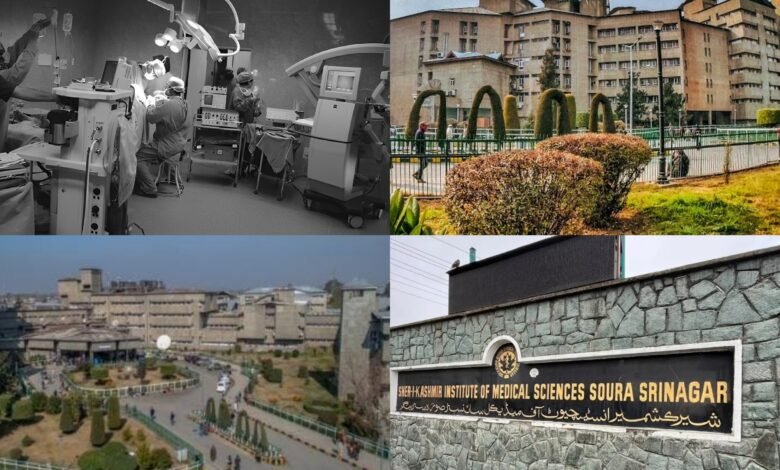
SRINAGAR: Some institutions are more than buildings; they become lifelines for generations. The Sher-i-Kashmir Institute of Medical Sciences (SKIMS), Soura, Srinagar, is one such institution, which has played a defining role in transforming the healthcare landscape of Jammu and Kashmir.
For thousands of patients and their families, SKIMS represents hope during the most difficult moments of their lives. From complicated surgeries and cancer treatment to cardiac care, kidney transplantation, neurological disorders and emergency medical services, the institution has remained a major referral centre for patients from different parts of Jammu and Kashmir and neighbouring regions.
The story of SKIMS is one of vision, collective contribution, professional dedication and public service. Its establishment is closely associated with the vision of Sher-e-Kashmir Sheikh Mohammad Abdullah, while its development and continued functioning reflect the extraordinary efforts of generations of doctors, surgeons, nurses, paramedical employees, researchers, technicians and successive managements.
Sheikh Mohammad Abdullah’s vision that changed Kashmir’s healthcare landscape
The idea of establishing a specialised medical institution in Kashmir emerged during the leadership of Sheikh Mohammad Abdullah.
In 1972, Sheikh Abdullah and his associates initiated efforts to establish a public charitable trust for setting up an advanced medical institution in the Valley. The Sher-i-Kashmir National Medical Institute Trust was formally registered on May 19, 1973, with the objective of establishing a specialised medical institute at Soura.
The vision was to bring advanced healthcare facilities closer to the people of Kashmir so that patients suffering from complicated diseases would not have to travel outside the Valley for specialised treatment.
Sheikh Abdullah approached the then Jammu and Kashmir Government seeking cooperation and land for the proposed institution. His initiative eventually received government support, paving the way for the establishment of what would become one of the region’s most significant healthcare institutions.
His contribution remains an important chapter in Kashmir’s healthcare history, as the institution he envisioned continues to serve generations of patients.
The land behind the institution: A collective contribution
The land history of SKIMS is another important aspect of its establishment and deserves historical clarity.
SKIMS was not simply established on land personally owned by Sheikh Mohammad Abdullah. Historical accounts indicate that the government provided land to the charitable trust following Sheikh Abdullah’s initiative.
In October 1973, the government sanctioned the lease of 292 kanals and 8 marlas of land at Zoonimar to the Trust for 40 years at an annual rent of Rs 101. The government also sanctioned the transfer of the existing Government Dispensary at Soura, including its buildings and associated land, to the Trust.
Private philanthropy also contributed to the institution’s establishment. Bhai Anant Singh Gauri, a prominent cinema entrepreneur, along with his family trust, reportedly donated more than 50 kanals of land in 1978. Raj Sawhney, then Secretary of the Trust, also reportedly contributed around 60 kanals.
A formal agreement between the government and the Trust was signed in December 1980, under which the government assumed responsibility for construction, equipment, staffing and other project-related expenditure.
The establishment of SKIMS was therefore a collective effort involving Sheikh Abdullah’s vision, government assistance and contributions from private individuals.
From a dream to a major medical institution
Construction of SKIMS commenced in 1976 with financial assistance from the Jammu and Kashmir Government under the Fifth and Sixth Five-Year Plan allocations.
On December 5, 1982, the institute was partially commissioned, marking a historic milestone in the healthcare history of Kashmir. Its initial services included an outpatient department and 150 inpatient beds.
Another important milestone came in 1983, when the Jammu and Kashmir Legislature enacted the SKIMS (Grant of Degrees) Act. The Act was published in the Government Gazette on August 19, 1983, and came into force on May 1, 1984, giving the institute degree-awarding powers.
Over the decades, SKIMS developed into a major centre for specialised healthcare, postgraduate medical education and biomedical research.
The real strength of SKIMS: Its doctors, nurses and paramedical workforce
While the contribution of Sheikh Mohammad Abdullah in envisioning the institution deserves recognition, the story of SKIMS would remain incomplete without acknowledging the people who have dedicated their professional lives to keeping it functional.
The doctors, surgeons, nursing staff, paramedical employees, laboratory technicians, radiology personnel, pharmacists, operation theatre teams, emergency staff and other supporting employees constitute the backbone of this institution.
Behind every complicated surgery, every life-saving emergency intervention, every dialysis session, every cancer treatment and every successful medical procedure stands a team of professionals working under immense pressure.
Many employees perform their duties through demanding shifts, often dealing with a heavy patient load and challenging working conditions.
The management of SKIMS also carries enormous responsibility in ensuring the smooth functioning of a large tertiary-care institution, balancing patient services, infrastructure development, procurement, medical education, research and administrative requirements.
The dedication of successive managements and the present leadership, alongside the commitment of the medical and supporting workforce, has helped SKIMS maintain its importance in the healthcare system of Jammu and Kashmir.
Their contribution deserves recognition, appreciation and adequate institutional support.
SKIMS: A wide network of specialised medical and surgical services
The range of specialised medical services available at SKIMS is among the important reasons behind its significance as a major referral institution in Jammu and Kashmir.
According to the specialised department list shared by an SKIMS official, the institute has services and specialties covering several important branches of modern medicine and surgery.
These include:
Cardiology and Interventional Cardiology.
Cardiothoracic and Vascular Surgery (CTVS).
Neurology.
Gastroenterology.
Nephrology.
Urology.
General Medicine.
Endocrinology.
Surgical Gastroenterology.
Haematology.
Medical Oncology.
Radiation Oncology.
Surgical Oncology.
Palliative care Medicine.
Paediatric Surgery.
Plastic Surgery.
Emergency Medicine.
Critical Care.
Pulmonary Medicine.
Rehmotology.
Immunology.
The presence of these specialised disciplines reflects the institute’s broad role in managing complex medical conditions, advanced surgical requirements, cancer care, cardiac diseases, neurological disorders, kidney-related illnesses and critical emergencies.
For patients from remote villages, towns and far-flung districts, access to such specialised services at a major institution like SKIMS can be crucial, particularly when advanced treatment is not readily available at smaller healthcare facilities.
A centre of medical education and research
Apart from providing specialised healthcare, SKIMS has made significant contributions to postgraduate medical education, nursing education, medical research and the development of specialised healthcare professionals.
Generations of doctors, specialists, nurses and paramedical professionals trained at SKIMS are serving in different healthcare institutions across Jammu and Kashmir and beyond.
Its academic and research responsibilities make it much more than a conventional hospital. It is an institution that contributes simultaneously to patient care, medical knowledge, professional training and the future development of healthcare.
Growing challenges: The need for stronger government support
Despite its achievements and the dedication of its workforce, SKIMS faces several challenges that require sustained attention from the Jammu and Kashmir Government.
One of the most concerning issues is the shortage of manpower.
According to information submitted by SKIMS to the government in September 2026, the institution had 1,366 vacant positions against 2,757 sanctioned posts.
The reported vacancies included:
150 posts in the medical cadre.
797 posts in the paramedical and technical cadre.
419 posts in the nursing cadre.
These figures indicate that nearly half of the sanctioned workforce positions were vacant, placing additional pressure on the available employees.
For an institution handling complicated medical cases and a continuous flow of patients, such vacancies can create operational difficulties and increase the workload of existing doctors, nurses and paramedical staff.
The issue requires urgent attention, particularly in departments where adequate manpower is essential for round-the-clock patient care.
Autonomy and administrative challenges
Institutional autonomy and administrative arrangements have also remained important issues concerning SKIMS.
In February 2026, Health and Medical Education Minister Sakeena Itoo reiterated the government’s commitment to restoring the pristine glory and autonomous status of SKIMS.
The government has also acknowledged administrative changes following the reorganisation of Jammu and Kashmir, including changes concerning the Governing Body and the merger of the institute’s independent Engineering Wing with the Public Works (R&B) Division, Soura.
For a specialised medical institution operating around the clock, efficient administrative decision-making, timely infrastructure maintenance and quick execution of development works are essential.
The institution needs mechanisms that allow it to address its operational requirements without unnecessary delays.
Procurement delays and infrastructure requirements
Another issue requiring attention is the procurement of medical equipment, medicines, surgical consumables and other essential supplies.
In March 2025, the government informed the Legislative Assembly that capital expenditure funds amounting to Rs 34.16 crore in 2021-22, Rs 21.72 crore in 2022-23 and Rs 34.22 crore in 2023-24 had lapsed.
The government attributed procurement-related difficulties to insufficient and sluggish internal purchasing mechanisms and stated that the Jammu and Kashmir Medical Supplies Corporation had been extended to SKIMS to address the issue.
Such challenges underline the importance of strengthening procurement systems and ensuring that funds allocated for healthcare development are utilised efficiently and within the stipulated financial year.
SKIMS also requires continuous investment in modern medical equipment, advanced diagnostic facilities, operation theatres, intensive care units, emergency services and infrastructure expansion to meet growing patient requirements.
What SKIMS needs to serve people better
If SKIMS is expected to continue functioning as the backbone of specialised healthcare in Jammu and Kashmir, it must receive the institutional and financial support necessary to fulfil that responsibility.
Expedited recruitment against vacant posts, stronger administrative and financial autonomy, an efficient engineering and maintenance mechanism, faster procurement of essential equipment and medicines, infrastructure expansion and greater investment in medical research must remain priorities.
Equally important is improving working conditions for the doctors, nurses, paramedical employees and other staff members who carry the responsibility of providing healthcare services under challenging circumstances.
The government’s commitment to strengthening SKIMS must translate into concrete improvements on the ground rather than remain confined to official announcements.
A legacy that must be protected
The journey of SKIMS is a story of a vision that became a public institution and a medical workforce that has kept that vision alive through decades of service.
Sheikh Mohammad Abdullah deserves recognition for initiating the idea of an advanced medical institution in Kashmir. The government, private philanthropists and all those who contributed to its establishment also deserve acknowledgement.
However, the legacy of SKIMS equally belongs to the doctors who spend sleepless nights in emergency wards, surgeons who perform complicated operations, nurses who care for critically ill patients, paramedical employees who support life-saving procedures, technicians who operate sophisticated equipment and every employee who contributes to the functioning of this institution.
Their dedication must be matched by adequate institutional support.
SKIMS has demonstrated what a specialised medical institution can achieve for the people of Jammu and Kashmir. Its future, however, depends on continued investment, efficient administration, adequate manpower and the government’s willingness to address its genuine requirements.
An institution established to save lives should never have to struggle for the basic resources required to fulfil its mission.
Recognising Sheikh Mohammad Abdullah’s vision, appreciating the hard work of SKIMS’s medical fraternity and ensuring stronger government support are equally important responsibilities.
SKIMS is not merely a hospital; it is the hope of thousands of fam
ilies, the workplace of thousands of dedicated professionals and one of Kashmir’s most valuable public institutions. Its legacy must be protected, its workforce strengthened and its future secured.