A War on Pause, Not Over: Pentagon Readies Iran Options as Trump Rules Out Strikes Before Midterms
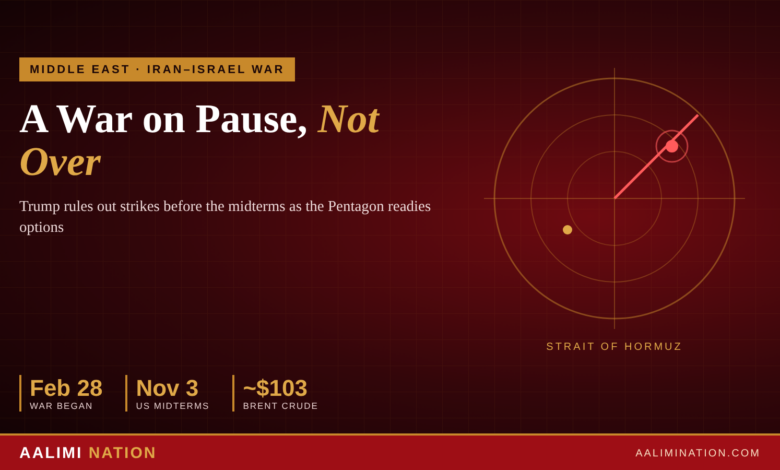
The Pentagon has been told to prepare for renewed combat, but President Trump says strikes will not come before the November 3 midterm elections. In the meantime, the Strait of Hormuz remains a flashpoint.
WASHINGTON / TEHRAN — For more than seven months, the Gulf has been at war. On February 28, the United States and Israel struck Iran in the middle of nuclear negotiations, killing Supreme Leader Ali Khamenei and other senior officials. His son, Mojtaba Khamenei, was named successor on March 8. Iran retaliated with missiles and drones against Israel, US bases and Gulf states. Hezbollah reopened its front, and Israel invaded southern Lebanon.
Since then, a sequence of truces has failed. A two-week ceasefire began on April 8. Talks in Islamabad collapsed days later, and Washington imposed a naval blockade. A memorandum signed on June 17 lifted that blockade, and on June 28 both sides agreed to stop exchanging fire. On July 8 that agreement also collapsed, after Iran attacked commercial ships in the Strait of Hormuz.
The midterm calculation
This week, US politics became central to the conflict. Axios reported on October 7 that the Pentagon had told Central Command to complete preparations for resuming major combat. Expected targets included Iran’s energy infrastructure and nuclear sites. One Israeli official told the outlet that the chances of renewed war rise sharply after the US elections.
The next day, Trump announced on Truth Social that the US would not attack Iran before the November 3 midterm elections. He pointed to Iran’s weakened economy and military and said the blockade would remain.
“We will not be attacking Iran at any time prior to the Midterm Elections.”
— President Donald Trump, Truth Social
Oil markets reacted immediately. Brent crude rose above $105 a barrel on the strike reports, then eased to around $103 after the post. Renewed fighting just before polling day would mean higher fuel prices, a political risk for the president.
Who controls Hormuz?
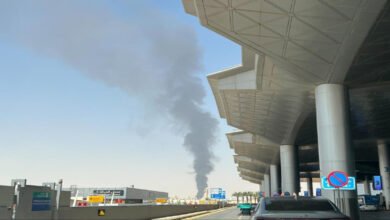
About a fifth of the world’s oil normally passes through the Strait of Hormuz, and both sides claim the upper hand there. Secretary of State Marco Rubio said this week that the strait is open and that Iran has lost control of it. An adviser to the Revolutionary Guards insisted that Iran still considers it closed, while admitting some oil is getting through. The shipping analytics firm Kpler said regional oil exports have recently exceeded pre-war levels. Shell’s chief executive put Middle East flows at around 80 per cent of normal. On Tuesday, a crude tanker was struck in the strait, though no casualties were reported.
Diplomacy without progress
Talks continue indirectly. Qatari mediators are waiting for Iran’s response to a US counterproposal that includes nuclear concessions. Foreign Minister Abbas Araghchi said Tehran expected to reply within days. President Masoud Pezeshkian, however, reportedly dismissed the talks as meaningless.
The central dispute is uranium enrichment. Vice-President JD Vance has asked for a meaningful reduction in Iran’s capacity, a softer line than Trump’s earlier demand for zero enrichment. Tehran still calls its right to enrich a red line. Vladimir Putin told Pezeshkian that Russia would do everything it could to help end the war. The two leaders were due to meet in Turkmenistan on Friday.
THE HUMAN COST
- Iran: 3,528 killed (Iranian govt); 3,684 (HRANA)
- Israel: 40 soldiers, 31 civilians killed
- United States: 19–23 troops killed, ~820 wounded
- Figures vary by source
The nuclear question remains unresolved. Strikes hit Natanz, Arak and other facilities in the spring, but Iran has barred international inspectors from the damaged sites. No one can say for certain how much enriched uranium survives. For India, which buys Gulf oil and has millions of citizens working in the region, the outcome of this war matters greatly.
— Aalimi Nation Foreign Desk

ANN News is the first and only 24*7 Tv News Channel of Kashmir, having its headquarters at Srinagar. ANN News is available on all leading cable Networks, Also Available On JIO Tv , Vodafone,TataPlay , Candor Network, Dailyhunt and other leading Platforms