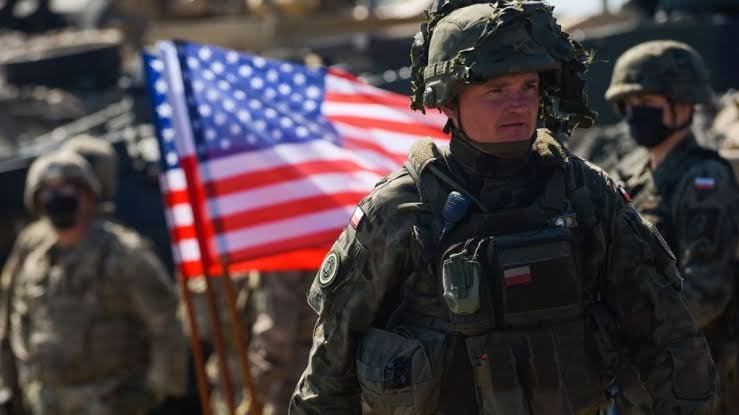
Washington: A proposal by U.S. Secretary of Defense Pete Hegseth to significantly reduce American military forces stationed in Europe was halted at the last minute after facing resistance from senior White House officials, according to a report by The Wall Street Journal.
The episode highlights ongoing divisions within President Donald Trump’s administration over the future of the U.S. military presence in Europe and Washington’s long-term commitment to the NATO alliance.
According to officials familiar with the discussions, Hegseth had planned to announce additional troop reductions during a meeting of NATO defense leaders in Brussels. The proposed cuts reportedly went beyond the cancellation of an armored brigade deployment to Poland and the earlier withdrawal of an infantry brigade from Romania.
However, after the proposal was reviewed by Secretary of State and Acting National Security Adviser Marco Rubio, along with other senior officials, the plan was suspended.
Instead of announcing immediate reductions, Hegseth stated that the Pentagon would conduct a comprehensive review of U.S. force deployments across Europe—a process expected to take up to six months. The decision suggests that the Trump administration has yet to reach a final consensus on the pace and scale of any future troop withdrawals.
The debate comes amid President Trump’s continued criticism of NATO members, arguing that several allies spend too little on defense and have failed to adequately support U.S. strategic objectives, including recent military operations involving Iran.
Hegseth’s proposals and increasingly assertive rhetoric have raised concerns among America’s allies and lawmakers from both major political parties. Critics warn that substantial troop reductions could weaken NATO’s deterrence capabilities, strain transatlantic relations, and embolden Russia.
The issue is expected to feature prominently during next week’s NATO leaders’ discussions in Ankara, where alliance members will seek to reaffirm unity, strengthen collective defense commitments, and maintain support for Ukraine. However, officials fear disagreements between Washington and its European partners could overshadow the summit.
President Trump recently reiterated that the United States spends far more on NATO than any other member while receiving limited strategic benefits in return. Earlier Pentagon defense guidance also indicated that Washington intends to shift greater military focus toward the Indo-Pacific region and gradually transfer more responsibility for Europe’s conventional defense to European allies.
Despite the suspension of Hegseth’s proposal, analysts believe further reductions in U.S. troop levels across Europe remain a realistic possibility as the administration continues its strategic review.

ANN News is the first and only 24*7 Tv News Channel of Kashmir, having its headquarters at Srinagar. ANN News is available on all leading cable Networks, Also Available On JIO Tv , Vodafone,TataPlay , Candor Network, Dailyhunt and other leading Platforms