
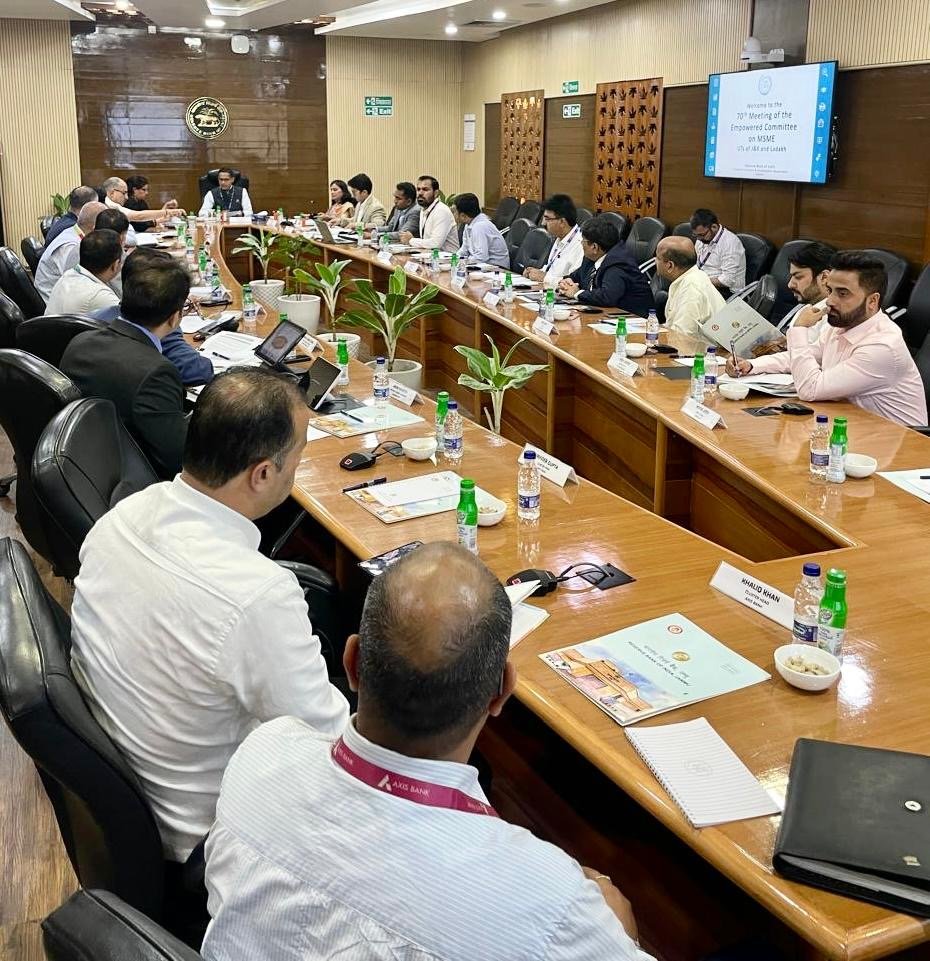
KCC&I Strongly Advocates Easier MSME Financing, Wider TReDS Awareness at 70th Empowered Committee Meeting
The Kashmir Chamber of Commerce and Industry (KCC&I) today strongly pitched for enhanced MSME financing, wider awareness regarding RBI-backed digital financing platforms, easier access to collateral-free loans, and a more practical approach towards stressed business accounts during the 70th meeting of the Empowered Committee on Micro, Small and Medium Enterprises (MSMEs) for the Union Territories of Jammu & Kashmir and Ladakh held in Jammu.
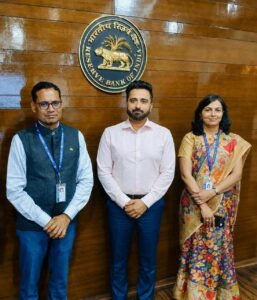
The Chamber was represented by its Joint Vice President, Farooq Amin, who highlighted several critical issues concerning MSMEs, startups, tourism-linked enterprises, handicrafts, industrial units, and small businesses operating across Jammu and Kashmir.
During the meeting, KCC&I raised serious concerns over the extremely low awareness regarding the Trade Receivables Discounting System (TReDS), an RBI-regulated digital financing platform aimed at helping MSMEs unlock working capital through discounting of trade receivables and invoices in a transparent, paperless, and collateral-free manner.
The Chamber stated that TReDS has immense potential to improve liquidity for MSMEs by ensuring timely payments against invoices raised on corporates, Public Sector Undertakings (PSUs), and government departments. However, KCC&I observed that most MSMEs in Jammu and Kashmir remain unaware of the platform and its benefits.
Speaking during the meeting, Farooq Amin said that timely awareness regarding TReDS could have significantly helped businesses tackle the severe liquidity crisis currently affecting the MSME sector in the Union Territory.
KCC&I urged banks, financial institutions, government departments, and TReDS operators to launch aggressive awareness campaigns and stakeholder outreach programmes across industrial estates and business clusters in Jammu and Kashmir.
Responding to the concerns raised by KCC&I, RBI Regional Director J&K, Chandrashekhar Azad, emphasized that Udyam Registration is mandatory for MSMEs to avail benefits under several government and RBI-supported schemes. He directed banks to intensify awareness drives regarding Udyam Registration and stressed that KCC&I should be actively involved in such outreach campaigns for wider engagement with entrepreneurs and business stakeholders.
The RBI Regional Director also instructed banks and TReDS-related institutions to increase awareness and publicity regarding the platform among MSMEs and industrial units across Jammu and Kashmir.
KCC&I further raised serious concerns regarding the low disbursement of loans under the Credit Guarantee Fund Trust for Micro and Small Enterprises (CGTMSE) scheme in Jammu and Kashmir. The Chamber stated that despite the scheme being designed to facilitate collateral-free loans, entrepreneurs continue to face demands for collateral security, personal guarantees, and cumbersome banking procedures.
The Chamber observed that average loan disbursement figures under MSME schemes in Jammu and Kashmir remain significantly lower compared to several other regions of the country and called for immediate corrective intervention.
Highlighting the prevailing unemployment situation in the Union Territory, KCC&I stressed the urgent need for easier access to low-interest credit and simplified financing procedures for startups, youth entrepreneurs, and existing business units. The Chamber urged banks to adopt entrepreneur-friendly norms without excessive insistence on collateral security and guarantees.
KCC&I also criticized rigid banking practices, particularly excessive dependence on CIBIL scores and technical classifications without adequately considering the extraordinary challenges faced by businesses in Jammu and Kashmir.
The Chamber pointed out that several sectors, especially tourism and allied industries, have suffered repeated economic setbacks due to unforeseen developments, including the impact on tourism following the Pahalgam incident last year and other disruptions affecting business activity and repayment capacity.
KCC&I urged banks and financial institutions to adopt a pragmatic and humanitarian approach while dealing with stressed MSME accounts and avoid coercive recovery practices, public “name and shame” tactics, and harsh classifications that further damage already distressed enterprises.
The Chamber strongly advocated for a dignified and consultative resolution mechanism for entrepreneurs facing genuine financial distress and demanded inclusion of KCC&I in consultative committees dealing with stressed MSME accounts and NPAs.
During the meeting, the RBI Regional Director advised banks to engage more actively with KCC&I and seek the Chamber’s assistance in resolving issues relating to collateral requirements, MSME distress, and financing bottlenecks.
KCC&I also highlighted the importance of the Emergency Credit Line Guarantee Scheme (ECLGS) 5.0, which provides 100 percent government-guaranteed, collateral-free additional credit support to MSMEs, and stressed the need for wider awareness and easier accessibility for affected businesses in Jammu and Kashmir.
The Chamber additionally highlighted high rejection rates under self-employment and livelihood generation schemes including PM SVANidhi, PM Mudra Yojana, and PM Vishwakarma Yojana. KCC&I stated that many deserving applicants are being denied benefits due to procedural delays, documentation hurdles, and lack of awareness at the implementation level.
The Chamber sought a comprehensive review of rejection patterns under these schemes to ensure eligible beneficiaries are not deprived of institutional support.
KCC&I also urged banks and financial institutions to undertake regular financing reviews of industrial clusters and ensure equitable credit flow to sectors contributing significantly to employment generation and exports from Jammu and Kashmir.
The Chamber appealed to all MSMEs, startups, traders, artisans, entrepreneurs, and industrial units in Jammu and Kashmir to complete their Udyam Registration at the earliest to avail benefits under various government schemes, RBI initiatives, institutional financing programmes, and credit support mechanisms.

ANN News is the first and only 24*7 Tv News Channel of Kashmir, having its headquarters at Srinagar. ANN News is available on all leading cable Networks, Also Available On JIO Tv , Vodafone,TataPlay , Candor Network, Dailyhunt and other leading Platforms